Choosing a training provider in Jakarta is safer in three steps: first, narrow down the list with questions about your team's challenges, request a written quote detailing the components, and then check four things you can't see in a brochure. This order determines the outcome, as the provider with the most comprehensive module catalog isn't necessarily the best fit for the root of your problem.
Table of Contents
ToggleWhy do almost all offers look similar?
Nearly every proposal that reaches HR's desk contains a similar list of modules: communication, leadership, teamwork, stress management. This similarity is no coincidence. A catalog of modules is the quickest and easiest to present, while diagnosing a problem requires a conversation.
As a result, comparisons become biased. The most convincing candidate is usually the one with the most organized documentation, not the one with the best understanding of your problem. The real difference only emerges after one simple question: what do you understand about our problem?
Answers that mention specific symptoms, such as inter-division work handovers often being delayed until the end of the month, demonstrate a different approach than those that simply offer a two-day package. The former seeks to understand, while the latter already has an answer before even knowing the question.
The difference also lies in the categories. Some sell topics, while others work as team development and learning experience consultants. The former adds activities to the calendar. The latter starts by asking why the activity is necessary, and is willing to admit that the answer isn't training.
Three questions that filter the list faster
Before contacting anyone, write down the answers to these three questions on one page:
1. What symptoms are most costly to the team right now, and how do they look on a day-to-day basis?
2. Who has felt the symptoms the most, and since when?
3. If the program goes well, what will look different after three months?
These three answers are useful for two reasons. First, they allow you to assess the offer based on needs, not on the length of its module list. Second, they make your counter-questions more pointed.
Use the page actively. Send the same three questions to each potential provider, and then observe how they respond. Some respond with three sentences that point to similar symptoms in previous clients. Others respond with catalog attachments and price lists. The latter isn't necessarily a bad thing, but it doesn't demonstrate that they've read your problem.
Also, pay attention to who's asking questions back. A serious provider will usually want to know the number of participants, the type of work the team does, and what's been tried before. These questions indicate they're developing a work plan, not a schedule.
How to check providers before shortlisting
Before you shortlist three names, check these five things first. They can all be done in an hour.
- Clear business entity. A searchable company name, address, and official contact number. It's simple, but offers from parties with unknown legal entities are difficult to validate if problems arise mid-program.
- Reviewable portfolio. Not a list of logos, but rather a case study: what symptoms the client experienced, what was done, and what changed. Providers who keep their frameworks completely secret usually can't explain how they work either.
- Clarity of instrument licensing. If the offer includes a personality assessment, ask for the name of the instrument and the license holder at the outset, not when you sign.
- Willingness to provide references. Two to three client names that can be contacted, with permission. If the answer is always testimonials in the brochure, it's a sign the provider doesn't have references willing to talk.
- How to communicate during exploration. The speed and neatness of the response before signing usually reflects the neatness after signing.
One common mistake is judging a provider by the appearance of their presentation deck. A beautiful deck can be created in two days. A sharp diagnosis cannot.
What needs to be in a written offer
The content of the offer is more important than the document's appearance. The following components should be detailed individually, not summarized in a single sentence.
| Offer components | Why does it need to be detailed? | Risks if not detailed |
|---|---|---|
| Number of days and number of batches | These two numbers form the form of the activity | batches combined, talk time per person lost |
| Number of participants per batch | determine the facilitator's methods and concerns | one batch swells, the session goes one way |
| Facilitator's name and background | The material and the presenter should be the same person | the session was led by someone who had just read the material |
| Assessment instruments and their licensees | assessment results form the basis for company decisions | the results cannot be used for any decisions |
| Plans after the session is over | new habits need repeated reinforcement | Participants go home with notes, teams return to old habits |
| Example of a post-session report | this report that you bring to management | program results are only impressions, not proof |
| What is not included | make two offers comparable | additional charges appear after the schedule is locked |
| Contactable client references | self-verifiable evidence | only testimonials are available in the brochure |
There are two requests that HR often hesitates to make, even though they're perfectly reasonable. First, ask for a sample session report with client data masked. This report is what you'll use to explain the results to the board. Second, ask for a detailed cost breakdown per participant, not just a total. These two figures allow for comparisons without guesswork.
If there are components that aren't detailed, ask. Providers who are reluctant to detail components are also often difficult to hold accountable after the session is over.
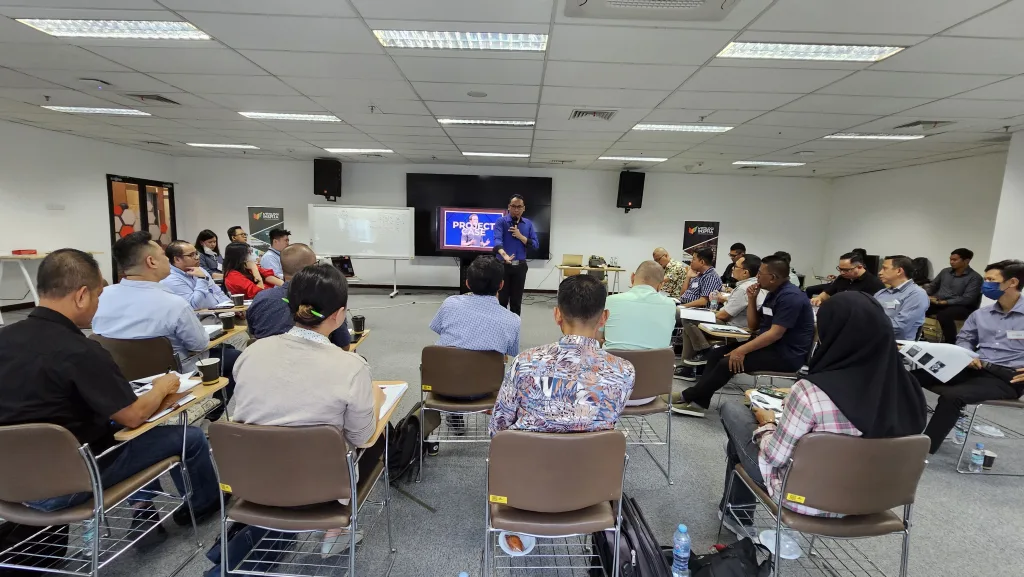
Batch size changes session quality
One thing that's often overlooked in comparisons is the number of participants per batch. This number determines the methods that may be used.
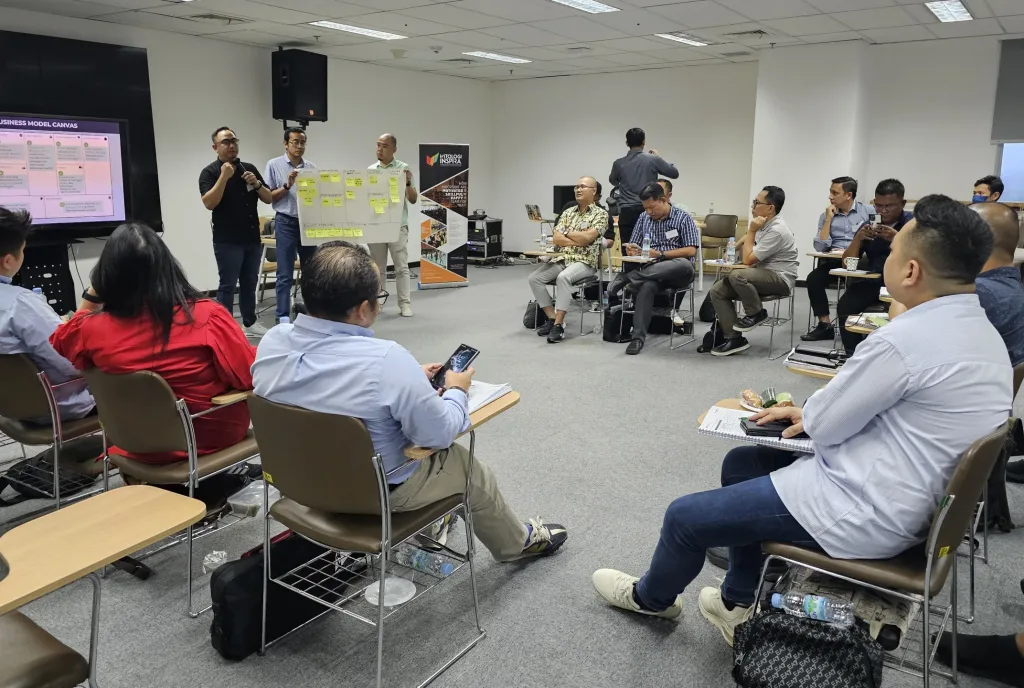
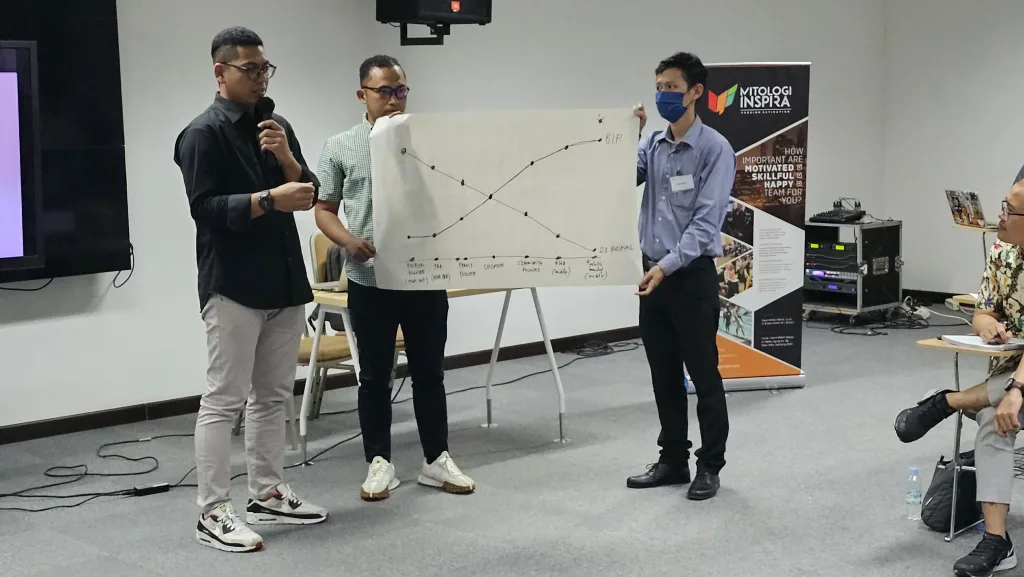
In the field, sessions with fewer than a dozen participants allow for pair practice, individual feedback, and discussion of real-life cases. Sessions with more than a dozen participants tend to devolve into lectures with several large simulations, as the speaking time per participant decreases.
Therefore, the useful question isn't how many training days, but rather how many participants per batch and how many batches are planned. Two offerings with the same number of days can deliver very different experiences if the batch numbers are different. A fair comparison always uses two factors: cost per participant and number of participants per batch.
How to compare two offers fairly
Compare per batch and per participant, not the total. Two offers can appear very different even though they're essentially the same, because one includes space rental and assessment instruments, while the other calculates them separately.
A common example: a company chooses the two-day offering with the lowest price, then discovers that assessments, reports, and reinforcement sessions are included in the package. When added up, the offering that initially seemed higher is actually cheaper per participant.
The reason isn't usually the daily price, but rather the number of participants required in a single batch. The more participants in a batch, the lower the price, and the less experience each person has.
Two quick ways to make the comparison fair: ask both providers to answer the same three questions, and ask them both to list what is not included in their offer. The details of the package contents that are usually in question are listed in company training package page.
Four things to check before signing
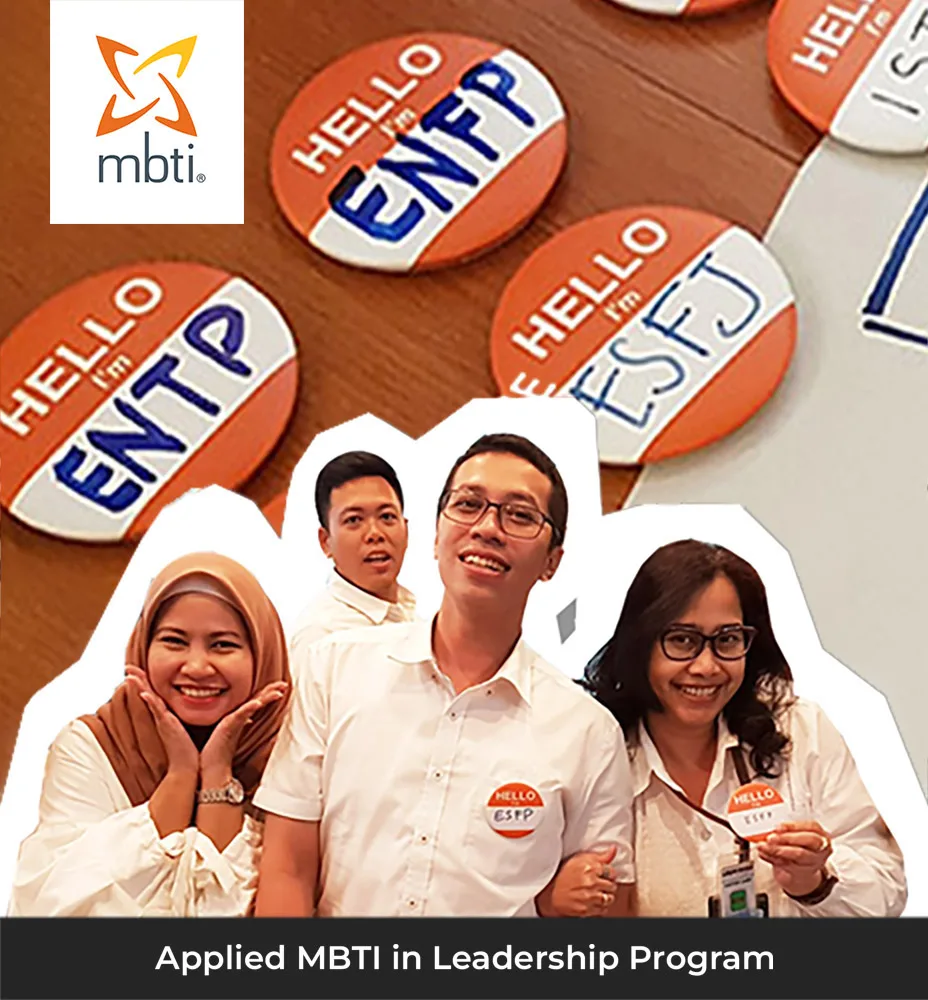
First, check the assessment instrument and its license holder. If the offer includes a personality assessment, ask for the name of the instrument and the license holder, then check directly with the rights holder. Mitologi Inspira, for example, is the official licensed MBTI vendor for Indonesia, and this can be checked with The Myers-Briggs Company. Providers using unofficial versions usually cannot name their license holder.
It's also important to understand the tool's limitations. The MBTI is not designed for recruitment or promotion decisions. Providers who honestly explain these limitations are generally more trustworthy than those who promise the assessment is a decision-making tool.
Second, the person who will lead the session. Make sure the person developing the material and the person leading the session are the same person, or at least there's a clear handover. This distinction is rarely visible in the presentation, but often felt in the room.
Third, contactable references. Ask for the names of two or three clients who have permission to be contacted. The most helpful question isn't about satisfaction, but rather what has changed two months after the session.
Fourth, a willingness to diagnose first. A provider who agrees to all requests without question is usually selling the topic. Questions that signal a serious provider are the opposite: what symptoms are most costly to your team, who is most affected, and how the changes will be seen after three months.
When is the best time to start preparing?
Preparation time is often overlooked, even though it is this that determines whether the program can start calmly or run in a hurry.
For programs that include pre-session diagnostics or assessments, count down six to eight weeks. This time is used for initial conversations, assessment distribution, developing appropriate materials, and scheduling participants who need to take a day or two off work.
For a single session without assessment, three to four weeks is usually sufficient for the provider, but not necessarily for your internal team. Three internal factors most often hold up the schedule: permission from the participant's supervisor, agreeing on a date that doesn't overlap with the closing period, and budget approval.
If the budget must go through the board, start early. Proposals that describe the symptoms, measures of success, and what happens after the session are much more likely to be approved than those that simply list modules and dates.
If the problem is not about training
Not all team symptoms can be addressed through training. If you're facing slow decision-making, overlapping roles, or conflicting objectives between divisions, training tends to add additional activities without addressing the underlying issues. What's needed first is an organizational diagnosis to ensure interventions are not misdirected.
Inspira's mythology opens the Team Development Journey with a diagnostic phase, and it's not a step to be skipped. Team synergy isn't built in a single session. A provider who is honest about these boundaries is more valuable than one who agrees to every request.
Next steps
Filter the list, request a quote with detailed components, and then check the four things above. How Mitologi Inspira's in-house training works and its scope is on the page. In-House Training, so you can compare the answers to your team's needs. If you're in the process of selecting a provider for broader needs, the page company training packages includes what is normally included and what is normally counted separately.
If you would like to discuss your team's needs first, the Mitologi Inspira sales team can be contacted on WhatsApp at 0811 922 3601. If you already have a more specific idea of your needs and would like a written offer, please submit it via requirement form.
Frequently Asked Questions
What is the most important factor when choosing a training provider in Jakarta?
Clarity about the problem being solved. Once the symptoms, participants, and success metrics are clear, evaluating the offer becomes easier and less likely to be influenced by the appearance of the brochure.
What is the difference between a training provider, training vendor, and team development consultant?
The first two terms are terms used by the market when searching for providers. The third refers to the category of work. The difference is only apparent in the offering: topic sellers offer a list of modules, while team development consultants offer a diagnosis first.
Is the offer with the lowest number always cheaper?
Not always. Offers can appear light because assessments, reports, reinforcement sessions, or logistics are calculated separately. The fairest way is to compare per batch and per participant with the same components.
Why does the number of participants per batch need to be asked from the start?
Because the number of participants determines the methods that might be used. Sessions with dozens of participants allow for pair practice and individual feedback. Sessions with dozens of participants tend to devolve into lectures with several large simulations.
How to check the authenticity of the assessment instrument used?
Ask for the name of the instrument and its licensee, then check with the rights holder. For the MBTI, the rights holder is The Myers-Briggs Company. Official providers are happy to provide this information.
How much time is needed to prepare before the program starts?
For programs with pre-session diagnostics or assessments, allow six to eight weeks. For single sessions without assessments, three to four weeks is usually sufficient for the provider, but internal permitting and budget approval often take longer.
Can all team problems be solved with training?
No. Issues related to structure, overlapping roles, or slow decision-making are best started with an organizational diagnosis. Training follows once the root causes are clear.
Reference
Baldwin, T.T., and Ford, J.K. (1988). Transfer of training: A review and directions for future research. Personnel Psychology, 41(1).
Salas, E., Tannenbaum, S. I., Kraiger, K., and Smith-Jentsch, K. A. (2012). The science of training and development in organizations. Psychological Science in the Public Interest, 13(2).
Goldstein, I. L., and Ford, J. K. (2002). Training in organizations: Needs assessment, development, and evaluation. Wadsworth.