
There are plenty of leadership training courses in Jakarta, but not many really change the way managers work. The difference isn't in the material, but in what you do before and after the session. Before choosing one, check to see if the organizer asks about your team's challenges first, as that's where the difference lies.
Table of Contents
ToggleWhy do Jakarta leadership trainings often not produce visible results?
Many companies send their managers to leadership training with the hope that things will change after they return. What often happens is that two weeks later, everything goes back to normal. Meetings are still long, decisions are still waiting for the boss, and old problems resurface under different names.
The material is usually not wrong. The most common cause is simple:
- Participants don't know what problems they will have to solve after they go home, so nothing is tested from the training.
- The material is selected from the title that is easiest to agree on, not from the symptoms that are currently occurring in the field.
- There's no one to remind you after the session is over, so old patterns can creep back in without anything holding them back.
Leadership is a skill practiced every day, not knowledge memorized in a classroom.
Things to check before choosing an organizer in Jakarta
There are many organizers to choose from in Jakarta, and most promise similar results. These six questions typically distinguish programs that become habits from those that remain as memories:
1. Was there a diagnostic session or interview before the program was developed? If the content is the same for all clients, it's a sign the topic is disconnected from your problem. 2. Has the facilitator worked with your industry and team size? It's not about the big name, but whether the examples used feel real to the participants. 3. Can the organizer articulate metrics of success up front? If all they promise is atmosphere and enthusiasm, it's an activity, not development. 4. Was there reinforcement after the session, not just the day of the session. This reinforcement is what makes the results sustainable? 5. Was the duration reasonable for the participants' workload? A three-day program where participants are still responding to work chats throughout the session won't stick. 6. Are references available for verification, or at least contact.
Don't start from the material, start from the problem
In Jakarta, requests for leadership training typically come from two directions: HR, who received a development budget this year, and business owners who feel their teams are slow to make decisions despite their talented staff. Both often start with a checklist of topics: communication, delegation, coaching, conflict. The topics aren't wrong, but the order is reversed.
The sequence works like this. First, identify the symptom you want to eliminate, in professional terms. For example, decisions always wait for one person, or feedback that only comes during appraisal meetings. From that symptom, formulate what skills need to be trained, who will train them, and how the results will be assessed after three months.
If the order were reversed, what would happen is that participants would learn a lot of interesting things, then go home to jobs they weren't ready for.
Leadership is carried out through communication and relationships
Whatever material is used, these two things are tested every day on a manager.
The first is communication. It's not about speaking fluently, but about whether others understand what's being asked. Managers who can't clarify priorities will be subjected to their own interpretations. Managers who don't provide feedback before problems escalate will likely encounter them again, in even more costly forms.
Second, relationships. This is often overlooked when budgets are tight, yet it's where a leader's job is to survive. Relationships aren't about intimacy, but about knowing who's affected by a decision, explaining the reasons before being asked, and remembering that the people they work for have their own life plans. Managers who make tough decisions but maintain strong relationships will be followed. Managers who are always right but don't maintain relationships will be avoided, and it will be evident in the next meeting.
The good news is, both can be trained. What's needed is repeated practice in real-world situations, not additional theory.
The program is running after three months
A leadership program that works usually shows its signs in the day-to-day work, not on the last day's evaluation sheet:
| What was checked | If it's just an event | If it really works |
|---|---|---|
| How the team makes decisions | everyone is waiting for the boss | the proposal came from the person who did the work |
| Reason for the meeting | discussing the same thing over and over again | Old issues are no longer open |
| Feedback | out during the annual assessment | appeared close to the event |
| Initiative | waiting for orders | someone proposed and then carried it out |
If after three months none of the right columns are filled, what needs to be checked is not the participants, but rather whether or not there are stages before and after the session.
Regarding duration, number of participants and costs
These three factors determine the cost of the program: the number of days, the number of participants in each batch, and whether the program is open to the public or tailored specifically to your company.
What's important to avoid is cutting corners. Diagnostics and preparation are often considered overhead costs that can be skipped, but that's where the difference lies. If budget constraints are important, a safer approach is to design a shorter program that still includes diagnostics and reinforcement, rather than a lengthy program that's only implemented once without follow-up.
How Inspira Mythology runs its leadership program
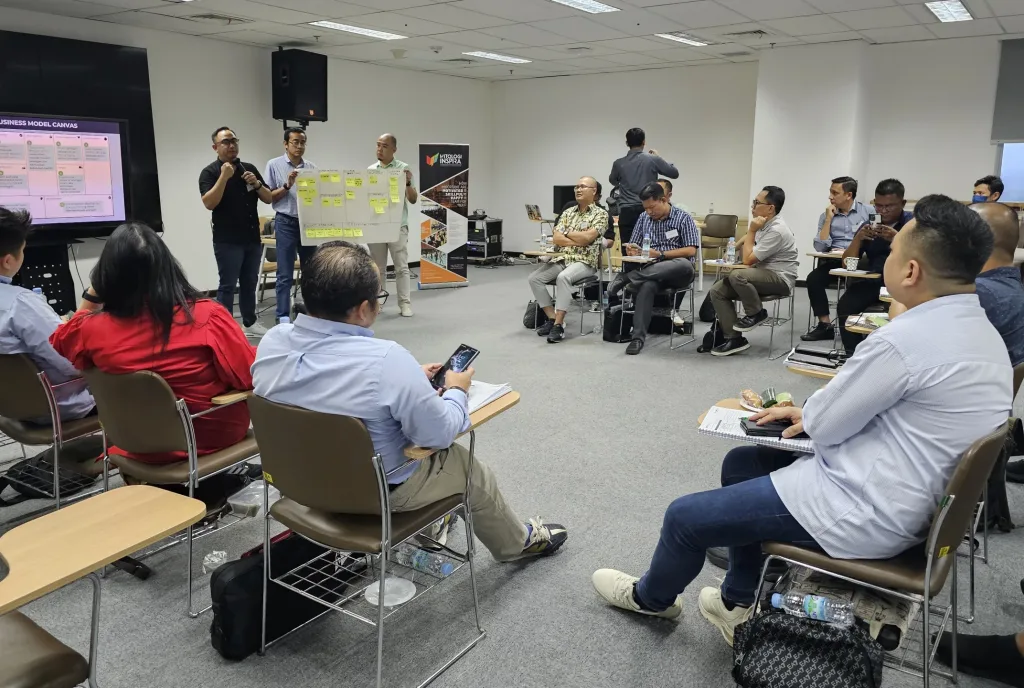
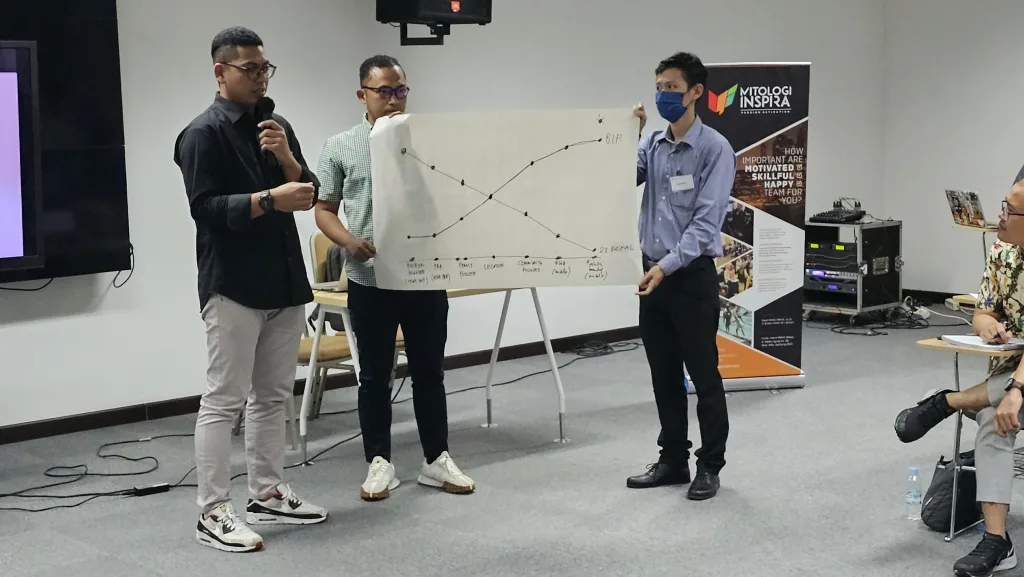
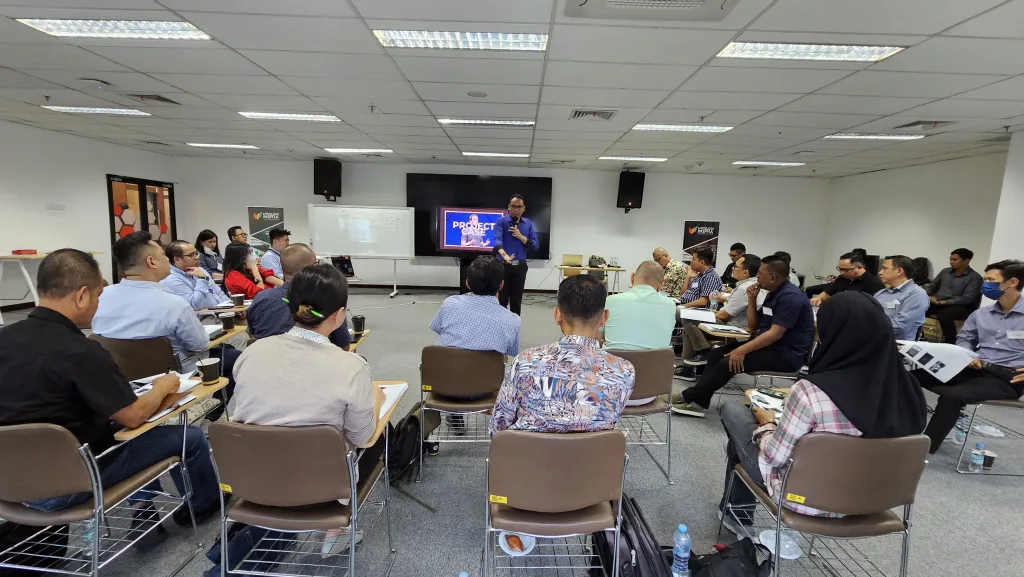
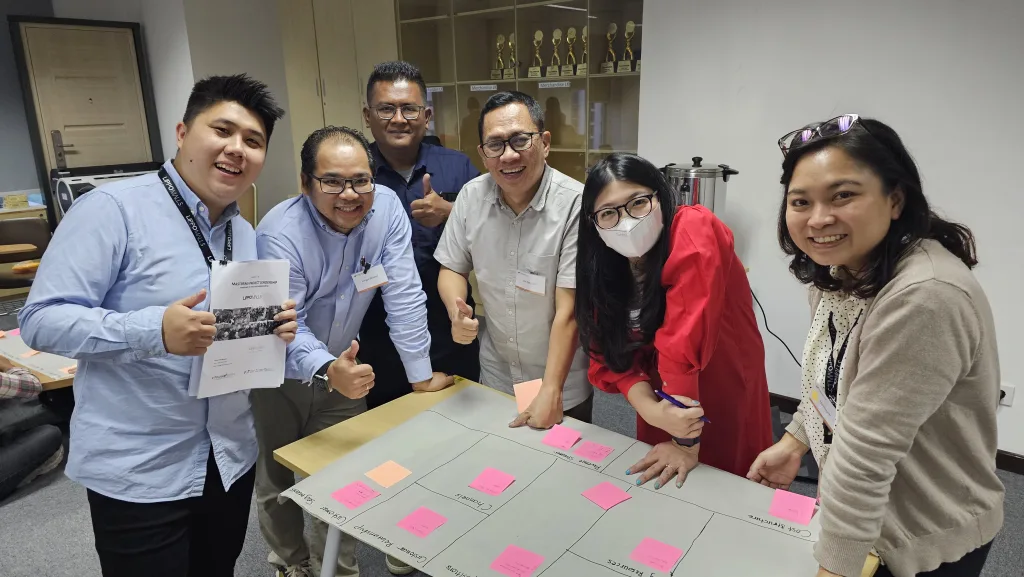
Our leadership program doesn't open with a list of materials. We start with an organizational diagnostic to identify the problem areas, then conduct individual assessments to help each leader understand their own working style, and then move on to training. After the sessions, there's a reinforcement phase to ensure the results are validated on the job, not just in the training room.
If your team needs an overview of the program, a complete description is available at leadership training program. To see where leadership fits in among the other skills we train, there is an explanation in six core development areas.
For teams whose problems are not yet clear and whose symptoms are just being felt, team diagnostic guide before training explain the questions that need to be answered first.
When leadership training is not the answer
There's one condition that needs to be examined first: if the problem isn't the way people lead, but rather the unclear rules of the game. For example, authority that's never stated, targets that change every month, or approval processes that require five desks. Leadership training can't fix that, and if it's forced, the participants will appear to fail when they're not the cause.
The sign is simple. If managers know what should be done but lack the authority to do it, what's needed is structural improvement, not additional training.
Frequently Asked Questions
How long does leadership training typically last?
The core training lasts one to three days, depending on the number of skills you want to develop. The difference isn't the length of the session, but rather whether or not there are pre- and post-session phases.
Can leadership training be conducted in-house at our office?
Yes. The in-house format is the one we use most often, as the material can be tailored to your company's specific issues, rather than a general list of topics.
Is the program suitable for first-time managers?
It's appropriate, and the results are usually most visible in this group. For new managers, the most pressing issues are usually how to assign tasks, how to praise, and how to convey objections without making people defensive.
How to measure the success of leadership training?
From changes in work, not from participant satisfaction at the end of the session. Typical measures include faster decisions, less recurring problems, and feedback that occurs close to the event.
Is there a need for an assessment before training?
It's not mandatory, but it's very helpful. The assessment allows participants to start from a personal perspective, so the material doesn't feel like general advice for everyone.
To find out which program is best for your team, contact the Mitologi Inspira sales team on WhatsApp at 0811 922 3601 or fill out the needs form at https://mitologiinspira.com/needs/. We usually start with a brief conversation about the symptoms you're experiencing.